

Melasma Treatment in Saudi Arabia: A Complete 2026 Guide
Daisy Bennett
Ngày
13/09/2026
Melasma is a common pigmentation condition that causes brown or gray-brown patches, particularly on the cheeks, forehead, nose, upper lip, and chin. For people living in Saudi Arabia, managing melasma can be particularly challenging because intense sun exposure can make pigmentation more noticeable and contribute to recurrence.
But there is no single treatment that works equally well for everyone.
The right approach depends on your skin type, pigmentation pattern, triggers, previous treatments, and how your skin responds to active ingredients.
This guide explains the most common melasma treatment options in Saudi Arabia, the ingredients used for pigmentation-prone skin, the importance of sun protection, and how to build a sustainable skincare routine.
Quick Answer: What Is the Best Treatment for Melasma?
Melasma usually requires a combination approach rather than a single “miracle” treatment. Sun protection is fundamental, while topical ingredients, prescription treatments, and dermatological procedures may be considered depending on the severity of pigmentation and individual skin characteristics. Persistent or uncertain pigmentation should be assessed by a qualified dermatologist.
1. What Is Melasma?
Melasma is an acquired pigmentation disorder characterized by irregular areas of increased pigmentation.
It most commonly affects sun-exposed areas of the face, including the:
- Cheeks
- Forehead
- Nose
- Upper lip
- Chin
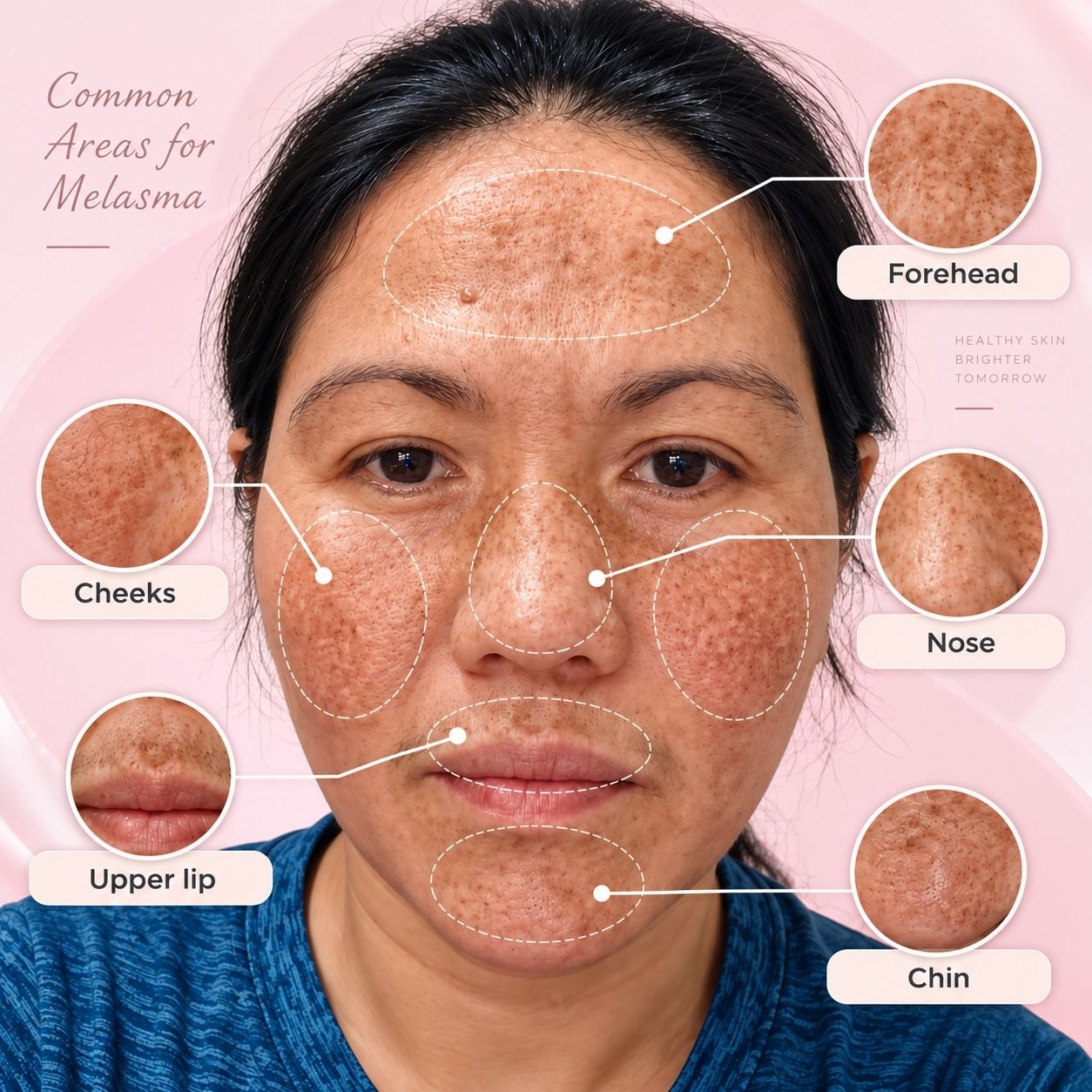
Melasma often develops symmetrically, meaning similar areas can appear on both sides of the face.
Unlike inflammatory skin conditions, melasma typically does not cause itching or pain.
If you are unsure whether your pigmentation is melasma, read our complete guide to melasma symptoms, causes, and treatment options.
👉 Learn more about Melasma symptoms and Causes
2. Why Can Melasma Be Challenging in Saudi Arabia?
Saudi Arabia's climate makes photoprotection particularly important for people with melasma-prone skin.
Intense Sun Exposure
Ultraviolet radiation is an important factor associated with melasma development and worsening.
Without appropriate photoprotection, pigmentation can become more noticeable even after improvement from treatment.
Visible Light
Visible light may also contribute to pigmentation, particularly in darker skin tones.
This is one reason why modern melasma management involves more than simply applying a pigmentation serum at night.
Hormonal Factors
Pregnancy and hormonal medications are among the factors associated with melasma.
This helps explain why the condition is particularly common among women.
Genetics
Genetic predisposition can also influence an individual's likelihood of developing melasma.
Skin Irritation
Aggressive skincare does not necessarily produce better results.
Irritation and inflammation may complicate pigmentation concerns, making a gentle, sustainable skincare routine particularly important.
3. What Are the Most Effective Treatments for Melasma?
There is no universal “best” melasma treatment.
Dermatological management can involve several approaches depending on the individual.
Let's examine the major options.
4. Topical Treatments for Melasma
Topical treatment is commonly used as part of melasma management.
Different ingredients target pigmentation through different mechanisms.
Hydroquinone
Hydroquinone has a long history of use in melasma treatment and works primarily by inhibiting tyrosinase, an enzyme involved in melanin production.
It can be effective, but irritation and other adverse effects can occur.
Higher concentrations and prolonged or inappropriate use should therefore not be undertaken casually.
Prescription-strength treatments should be used according to professional medical guidance.
Retinoids
Retinoids such as tretinoin may be incorporated into dermatological treatment plans for melasma.
They influence skin cell turnover and can complement other pigmentation treatments.
However, irritation, dryness, and peeling can occur, particularly during initial use.
Azelaic Acid
Azelaic acid is another ingredient used for hyperpigmentation and melasma.
It can be particularly relevant when pigmentation occurs alongside acne-prone skin.
Tranexamic Acid
Tranexamic Acid (TXA) has received considerable attention in modern melasma research.
It is thought to influence biological pathways associated with melanogenesis, inflammation, and vascular activity.
Topical TXA is now incorporated into various pigmentation-focused skincare formulations.
Want to understand the science?
👉 Learn How Tranexamic Acid work for Melasma: How It Helps Stubborn Pigmentation
Niacinamide
Niacinamide is widely used in cosmetic skincare because of its versatility.
In pigmentation-focused routines, it may help support a more even-looking skin tone while also supporting skin barrier function.
Alpha Arbutin
Alpha Arbutin is another cosmetic ingredient commonly incorporated into products targeting uneven pigmentation.
Because different ingredients influence pigmentation through different mechanisms, well-designed formulations may combine several complementary ingredients.
5. What Is the Best Cream or Serum for Melasma?
This is one of the most common questions people ask when looking for a melasma treatment.
The answer depends on more than the product name.
When evaluating a cream or serum for melasma-prone skin, consider:
Active ingredients — Look for ingredients appropriate for pigmentation rather than relying solely on marketing claims.
Skin tolerance — Stronger does not automatically mean better. A product that continually irritates the skin may be difficult to use consistently.
Formulation — Concentration alone does not determine product quality. Delivery system, ingredient compatibility, stability, and overall formulation matter.
Skin type — Dry, oily, sensitive, and acne-prone skin may require different formulations.
Sun protection — No pigmentation-focused routine should be evaluated separately from daily photoprotection.
For a more detailed product-selection guide, read:
➡️ Best Cream for Melasma in Saudi Arabia: What Really Works?
6. Tranexamic Acid for Melasma: Why Is It Getting So Much Attention?
Tranexamic Acid deserves a separate discussion because it approaches pigmentation differently from many traditional cosmetic ingredients.
TXA influences the plasminogen–plasmin pathway, which is involved in downstream signaling associated with melanogenesis.
Research has investigated several forms of TXA for melasma, including:
topical application, oral administration, injections and procedural delivery.
However, these approaches are not interchangeable.
Topical TXA can be incorporated into cosmetic skincare products, whereas oral Tranexamic Acid is a medication and should not be self-prescribed for melasma.
For consumers looking primarily for a daily skincare routine, topical formulations are therefore a much more relevant discussion.
7. Melasma Cream vs Serum: Which Is Better?
Neither format is automatically superior.
The difference depends primarily on the formulation and the needs of your skin.
Serum
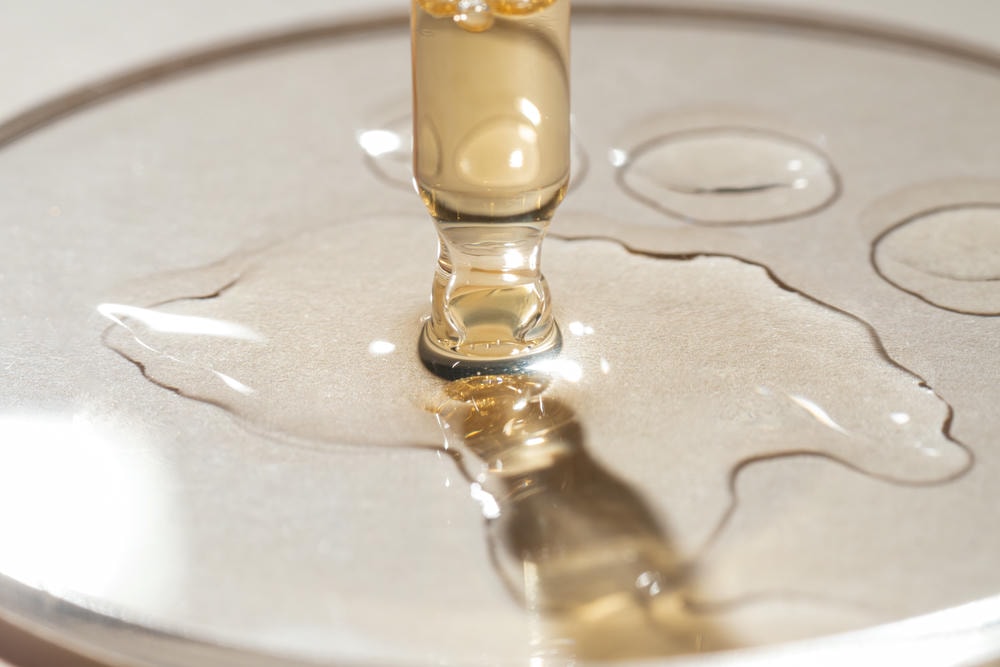
Serums are commonly designed to deliver targeted active ingredients in relatively lightweight formulations.
They may suit people who prefer layering products or who live in hot climates and dislike heavy textures.
Cream

Creams generally provide a richer texture and can be useful when additional moisturization and barrier support are required.
People with dry or easily irritated skin may prefer this type of formulation.
So Which Should You Choose?
Instead of asking:
“Is serum better than cream?”
ask:
“Does this formulation contain appropriate ingredients, suit my skin type, and fit into a routine I can use consistently?”
That is a more useful way to evaluate pigmentation skincare.
9. Chemical Peels
Chemical peels may also be used as part of professional melasma management.
Different peeling agents and concentrations are available.
Potential benefits and risks depend on:
the peeling agent, concentration, skin type, pigmentation pattern and professional technique.
Because inappropriate peeling can cause irritation and post-inflammatory hyperpigmentation, stronger procedures should not be treated as ordinary home skincare.
10. Microneedling and Combination Treatments
Microneedling is another procedure sometimes incorporated into pigmentation treatment strategies.
Rather than simply “removing melasma,” it may be used alone or alongside selected topical treatments depending on the treatment protocol.
Combination approaches are common in melasma because the condition involves multiple biological pathways.
However, more treatment is not necessarily better.
The treatment plan should remain appropriate for the person's skin and risk profile.
11. Why Sunscreen Is Essential for Melasma
This is one of the most important sections of the entire article.
Treating pigmentation while repeatedly exposing the skin to triggering light without adequate protection can undermine the overall strategy.
People with melasma-prone skin should consider consistent broad-spectrum sun protection.
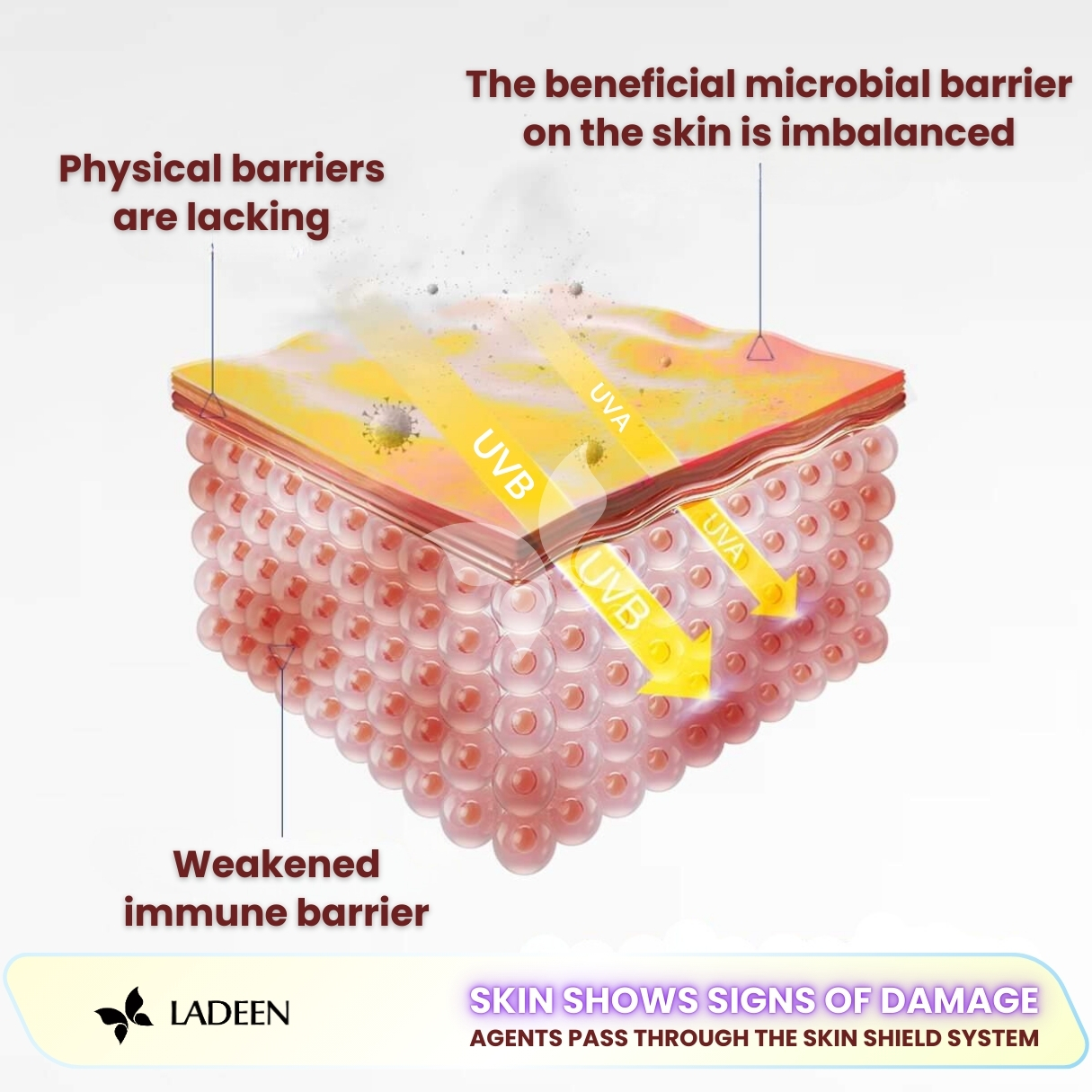
A daily routine can also include practical measures such as:
seeking shade during intense sunlight, using hats and other physical protection, and reapplying sunscreen when appropriate.
For people living in Riyadh, Jeddah, Dammam and other parts of Saudi Arabia, photoprotection should be considered part of melasma management rather than an optional skincare step.
12. A Simple Morning Routine for Melasma-Prone Skin
A complicated skincare routine is not always necessary.
A practical morning routine might look like:
Step 1 — Gentle Cleanser
Remove excess oil and impurities without unnecessarily stripping the skin.
Step 2 — Pigmentation-Focused Serum
Apply a suitable topical formulation containing targeted skincare ingredients.
Step 3 — Moisturizer
Support hydration and the skin barrier where needed.
Step 4 — Broad-Spectrum Sunscreen
Finish with appropriate sun protection.
Consistency is generally more useful than repeatedly changing products.

13. A Simple Evening Routine
An evening routine might include:
Step 1 — Cleanse
Remove sunscreen, makeup and environmental buildup.
Step 2 — Targeted Pigmentation Care
Use the pigmentation-focused treatment appropriate for your routine.
Step 3 — Moisturize
Finish with suitable barrier-supportive skincare when needed.
People using prescription treatments should follow the instructions provided by their healthcare professional.
14. Skincare Support for Melasma-Prone Skin
For consumers who prefer a targeted topical skincare approach, a pigmentation-focused serum can be incorporated into a consistent routine alongside appropriate sun protection.
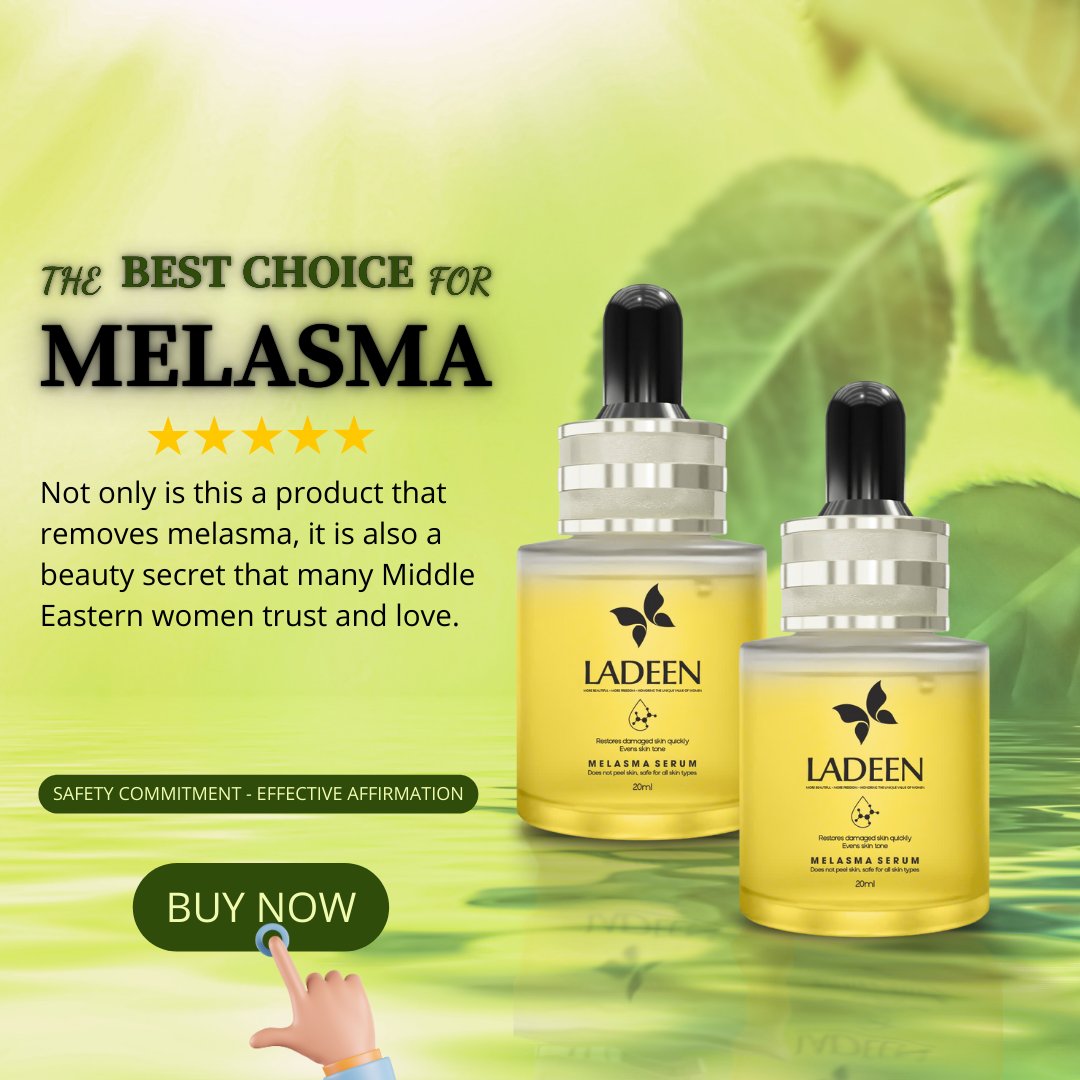
LADEEN MELASMA SERUM
LADEEN MELASMA Serum is formulated for pigmentation-prone skin and combines selected skincare ingredients targeting uneven-looking skin tone.
Rather than relying on harsh exfoliation, it is designed to fit into a consistent skincare routine focused on pigmentation management and skin support.
Looking for targeted skincare for melasma-prone skin?
15. How to Choose Melasma Skincare for Your Skin Type
Different skin types may require different formulations.
Sensitive Skin
Prioritize tolerability and introduce active ingredients carefully.
Avoid assuming that tingling, burning or peeling means a product is “working.”
Oily or Acne-Prone Skin
Lightweight, non-heavy formulations may be more comfortable.
Consider whether the routine also needs to address acne-related inflammation and post-inflammatory pigmentation.
Dry Skin
Barrier support and moisturization become particularly important.
Medium to Darker Skin Tones
Melasma is common in medium and darker skin tones.
Avoid unnecessarily aggressive treatment because inflammation itself can contribute to post-inflammatory pigmentation.
16. When Should You See a Dermatologist?
Not every dark patch on the face is melasma.
Professional assessment is particularly useful when pigmentation:
appears suddenly, changes rapidly, becomes raised, bleeds, causes pain or itching, has an unusual shape, or does not resemble typical symmetrical melasma.
A dermatologist can also distinguish melasma from other pigmentation disorders and determine whether prescription medication or a procedure is appropriate.
17. Final Thoughts
Managing melasma successfully usually requires more than searching for the strongest cream or the fastest procedure.
A more sustainable strategy combines:
appropriate pigmentation-targeting ingredients + skin-barrier support + consistent photoprotection + professional assessment when necessary.
For people living in Saudi Arabia, where intense sun exposure is a regular part of daily life, sun protection deserves particular attention.
Understanding your pigmentation first can also help you make better treatment decisions.
Recognize the signs → Understand the causes → Choose appropriate ingredients → Protect the skin → Maintain a consistent routine.
For those looking for a targeted topical option:
Discover LADEEN MELASMA SERUM
Explore a pigmentation-focused skincare formula designed to fit into a consistent routine for melasma-prone and unevenly pigmented skin.
18. Frequently Asked Questions About Melasma Treatment in Saudi Arabia
What Is the Best Treatment for Melasma?
There is no single treatment that is best for everyone. Management commonly involves consistent photoprotection together with appropriate topical skincare, prescription treatments or professional procedures depending on the individual's condition.
What Is the Best Cream for Melasma in Saudi Arabia?
The best option depends on skin type, pigmentation characteristics, formulation and active ingredients. Look beyond marketing claims and evaluate ingredients, tolerability and how the product fits into a complete routine.
Can Melasma Be Permanently Removed?
Melasma can be persistent and has a tendency to recur. Treatment can improve pigmentation, but promising permanent removal or guaranteeing that melasma will never return is not appropriate.
Does Tranexamic Acid Help Melasma?
Research has investigated Tranexamic Acid for melasma through several routes of administration. Topical TXA is also increasingly used in pigmentation-focused skincare formulations.
Does Melasma Get Worse With Sun Exposure?
Sun exposure can contribute to the development and worsening of melasma. Consistent photoprotection is therefore an important component of long-term management.
Is Laser Better Than Melasma Cream?
Not necessarily. They are different treatment approaches and suitability depends on skin type, pigmentation characteristics and individual circumstances. Procedures should be evaluated by an appropriately qualified professional.
Is Melasma Common in Darker Skin?
Melasma occurs across skin tones but is particularly common in people with medium to darker skin phototypes.
Do I Need Sunscreen While Treating Melasma?
Yes. Sun protection is a fundamental component of managing melasma-prone skin and should accompany other pigmentation-focused approaches.


