

Melasma Symptoms: 7 Common Signs and How to Recognize Them
Daisy Bennett
Ngày
08/09/2026
Melasma usually appears as flat, brown or gray-brown patches of pigmentation, most commonly on the cheeks, forehead, nose, upper lip, and chin. These patches often develop symmetrically on both sides of the face and usually do not cause itching or pain.
Recognizing common melasma symptoms can help you distinguish melasma from freckles, sunspots, and other forms of hyperpigmentation. This guide explains what melasma looks like, where it commonly appears, what can make it more noticeable, and when you should consider seeing a dermatologist.
What Is Melasma?

Melasma is an acquired pigmentation condition characterized by patches of increased skin pigmentation, most commonly affecting the face. It is particularly common in women and in people with medium to darker skin tones.Although melasma is not generally physically harmful, it can be persistent and may have a significant psychological or cosmetic impact. Sun exposure, hormonal influences, and genetic susceptibility are among the factors associated with its development and recurrence.
7 Common Signs and Symptoms of Melasma
1. Brown or Gray-Brown Patches
Melasma commonly appears as areas of increased pigmentation that may look light brown, dark brown, gray-brown, or darker than the surrounding skin.
The exact appearance can vary depending on skin tone, pigmentation depth, and sun exposure.
2. Flat Areas of Pigmentation
Unlike acne, rashes, or some other skin conditions, melasma patches are usually flat. The skin texture itself may feel normal even though its color has changed.
3. Symmetrical Discoloration
One characteristic pattern of melasma is symmetrical pigmentation.
For example, discoloration may develop on both cheeks or on corresponding areas on both sides of the forehead.
4. Pigmentation on the Cheeks and Forehead
The cheeks and forehead are among the areas commonly affected by facial melasma because they receive significant exposure to sunlight.
5. Dark Patches Around the Upper Lip, Nose or Chin
Melasma may also affect the bridge of the nose, upper lip and chin.
Pigmentation around the upper lip can sometimes be mistaken for other forms of hyperpigmentation, making professional assessment useful when the cause is uncertain.
6. Pigmentation May Become More Noticeable After Sun Exposure
Sun exposure can contribute to the development and worsening of melasma. Some people therefore notice that pigmentation becomes more pronounced following periods of increased sun exposure.
7. Melasma Usually Does Not Itch or Hurt
Melasma primarily affects pigmentation and typically does not cause physical symptoms such as itching, burning or pain.
If a pigmented area becomes painful, itchy, raised, inflamed, rapidly changes, or develops other unusual characteristics, it should not automatically be assumed to be melasma.
What Does Melasma Look Like?
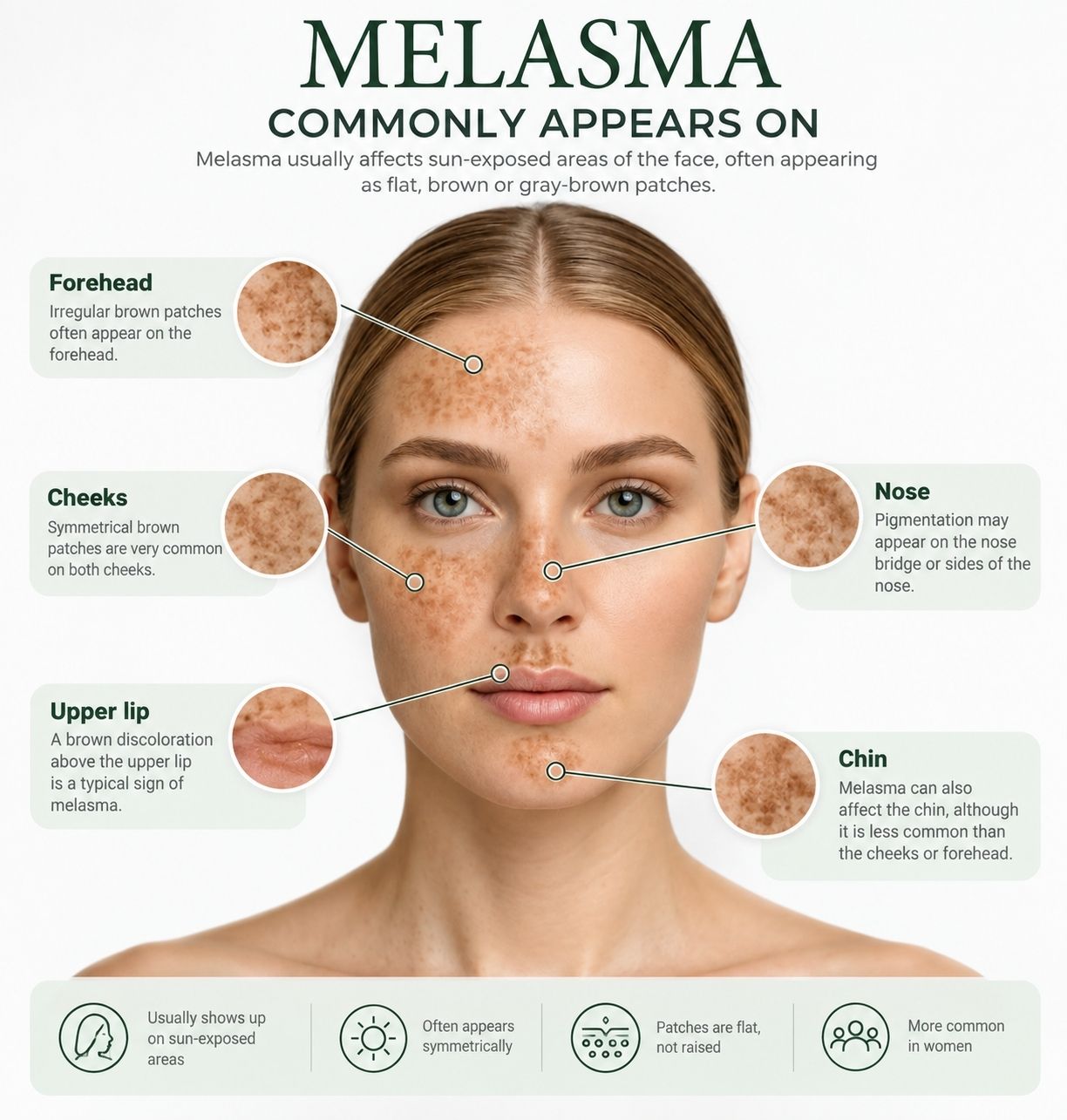
Where Does Melasma Usually Appear?
| Area | Typical Appearance |
|---|---|
| Cheeks | Symmetrical patches on both cheeks |
| Forehead | Irregular areas of pigmentation |
| Nose | Pigmentation across or around the nose |
| Upper lip | Brown discoloration above the lip |
| Chin | Patches around the lower central face |
| Jawline | Less common pattern along the jaw |
Melasma Symptoms on Different Skin Tones
Melasma can occur across different skin tones, but its color and contrast with surrounding skin may vary.
On lighter skin, patches may appear light to medium brown.
On medium or darker skin tones, pigmentation may appear darker brown, gray-brown, or more pronounced depending on the individual and the depth of pigmentation.
This is particularly relevant in diverse populations across the Middle East, where a wide range of skin tones and pigmentation patterns can be found.
Is It Melasma or Another Type of Pigmentation?
| Condition | Typical appearance | Common areas | Pattern |
|---|---|---|---|
| Melasma | Brown/gray-brown patches | Cheeks, forehead, upper lip | Often symmetrical |
| Freckles | Small individual spots | Sun-exposed areas | Scattered |
| Sunspots | Defined brown spots | Sun-exposed skin | Individual spots |
| PIH | Dark marks following inflammation | Previous acne/injury areas | Corresponds to inflammation |
👉 Learn More : Ladeen Cosmetic Review: Discover Premium Skincare for Radiant Beauty in the Middle East
What Can Make Melasma More Noticeable?
- Sun Exposure
- Hormonal Influences
- Pregnancy
- Genetic Predisposition
- Certain Medications or Hormonal Contraception
Melasma in Hot and Sunny Climates
For people living in hot and sunny climates such as the UAE, Saudi Arabia, Qatar, Kuwait, and Oman, consistent sun protection can be particularly important when managing melasma.
High levels of sun exposure throughout the year may make pigmentation management more challenging.
How Are Melasma Symptoms Managed?
While melasma cannot be cured completely, its symptoms can be managed with the right skincare and lifestyle choices:
✅ Daily Sun Protection
- Apply broad-spectrum sunscreen SPF 50+.
- Wear hats or scarves when outdoors.
✅ Use Gentle Skincare
- Products with Vitamin C, Niacinamide, Hyaluronic Acid can help improve skin tone.
- Avoid harsh scrubs or whitening creams that damage the skin barrier.
✅ Dermatological Treatments
- Chemical peels, laser therapy, or prescription creams may reduce melasma patches.
- Always consult a dermatologist in UAE, KSA, Qatar, Kuwait, or Oman for safe treatments.
When to See a Doctor

If your melasma symptoms worsen, spread quickly, or cause emotional stress, it’s best to consult a dermatologist. Early management can prevent the patches from becoming darker and harder to treat
👉 Learn More : Products specializing in treating acne, melasma, freckles, dark spots and skin aging are trusted by all women.
Final Thoughts
Melasma is a common skin concern in the Middle East, but with proper care and treatment, its symptoms can be controlled. By recognizing melasma symptoms early, protecting your skin from the sun, and choosing the right skincare routine, you can maintain a healthy, even-toned complexion.
👉 Looking for professional skincare solutions in the UAE, Saudi Arabia, Qatar, Kuwait, or Oman? Explore our dermatologist-approved products and expert guides to treat pigmentation safely and effectively.
Need Help Choosing a Skincare Routine for Pigmentation-Prone Skin?
👉 Discover LADEEN MELASMA SERUM, formulated as part of a targeted skincare routine for pigmentation-prone skin.
Frequently Asked Questions About Melasma Symptoms
What Are the First Signs of Melasma?
Melasma often first appears as flat areas of brown or gray-brown pigmentation on sun-exposed parts of the face. The cheeks, forehead, nose, upper lip, and chin are commonly affected, and the pigmentation may develop symmetrically on both sides of the face.
Does Melasma Itch?
Melasma typically does not cause itching. It mainly affects skin pigmentation rather than causing physical discomfort. If a pigmented area is persistently itchy, inflamed, raised, or otherwise unusual, consider having it assessed by a qualified healthcare professional.
Is Melasma Painful?
Melasma is generally not painful and usually does not cause burning or tenderness. Pain associated with a pigmented skin lesion may indicate another condition and should not automatically be assumed to be melasma.
Can Melasma Suddenly Appear?
Melasma can become noticeable over time or appear more apparent following changes associated with sun exposure or hormonal influences. Pregnancy and hormonal medications are among the factors associated with melasma. A sudden or unusual change in pigmentation should be professionally assessed when the cause is unclear.
Does Melasma Get Darker in the Sun?
Yes, sun exposure can make melasma more noticeable. Ultraviolet radiation and visible light can stimulate pigmentation, which is why consistent sun protection is an important part of managing melasma-prone skin.
Where Does Melasma Usually Appear?
Melasma most commonly affects the face, particularly the cheeks, forehead, bridge of the nose, upper lip, and chin. It often develops in a symmetrical pattern, meaning similar areas may be affected on both sides of the face.
How Can I Tell Melasma From Other Types of Hyperpigmentation?
Melasma often forms larger, irregular, symmetrical patches, whereas other forms of hyperpigmentation can have different patterns and causes. For example, post-inflammatory hyperpigmentation often develops after acne, irritation, or injury. Because several pigmentation conditions can look similar, a dermatologist can provide a more reliable diagnosis.
Can Melasma Occur on Darker Skin?
Yes. Melasma can occur across different skin tones and is particularly common in people with medium to darker skin tones. Its color and contrast can vary depending on natural skin tone and the depth of pigmentation.


